
This site uses cookies that need consent.
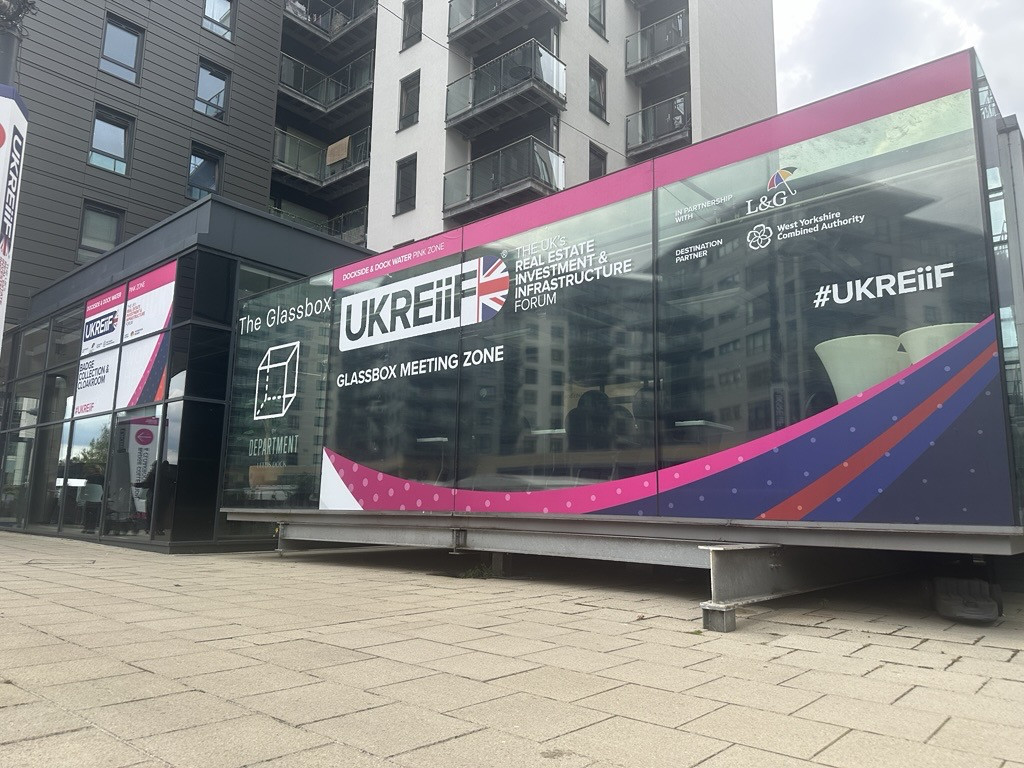
The Continuum team were delighted to attend this year’s UKREiiF event, where we supported a number of our clients in showcasing their regeneration and development opportunities. Alongside this, we were pleased to reconnect with colleagues from across the industry, with conversations highlighting three key themes that emerged consistently throughout the event. These themes captured much of the discussion across the week and reflected the priorities currently shaping the regeneration and development landscape.
A key theme throughout UKREiiF was the increasing pressure on development viability, which continues to be one of the most significant challenges facing the sector.
This is being driven by a combination of sustained global cost pressures and recent geopolitical instability, most notably the ongoing war in Iran. The conflict has contributed to volatility in global energy markets, particularly through disruption to oil and shipping routes in the Strait of Hormuz, placing upward pressure on fuel and construction-related energy costs. These increases are feeding directly into build costs across materials, transport, and supply chains.
Alongside this, elevated interest rates and tighter lending conditions are compounding affordability challenges, while contractors continue to price in risk more cautiously amid ongoing uncertainty. As a result, many schemes are now under greater scrutiny at appraisal stage, with viability gaps widening in both residential and mixed-use development.
To address this, local authorities need to take a more flexible and pragmatic approach to regeneration delivery. Rather than treating regeneration sites as single, comprehensive red line boundaries, councils should consider more phased and modular approaches to development.
By breaking larger sites into smaller, deliverable plots, authorities can bring forward development in stages, improving viability and reducing exposure to market volatility. This approach also enables councils to unlock early land receipts through the disposal of individual parcels, which can then be reinvested to help offset infrastructure costs, de-risk later phases, and support wider masterplan delivery
A second key theme highlighted at UKREiiF was the need to accelerate planning processes to support housing delivery and regeneration ambitions across the UK. While Government ambition remains strong, including the target to deliver 1.5 million homes within the current Parliament, there is growing recognition across both public and private sectors that the planning system itself remains a key constraint on delivery. In particular, the fact that planning is administered at a local level, combined with the significant number of statutory consultees involved in the process, often leads to extended timelines, increased complexity, and delays in decision-making, all of which can act as a barrier to bringing forward development at the pace required.
In many cases, these challenges are resulting in prolonged determination periods, which add uncertainty to project pipelines and increase holding costs for developers and landowners.
A third key theme emerging from UKREiiF was the impact of local government reorganisation and wider political change on regeneration and development delivery. Across a number of areas, structural reform within local authorities—alongside evolving devolution arrangements, continues to reshape governance, decision-making structures, and strategic priorities.
Alongside this, recent local election results have led to a noticeable shift in political control in some areas, with changes in administration bringing different policy perspectives and delivery priorities. Where new political parties or leadership groups take control, there is often a reassessment of existing regeneration strategies, housing targets, and infrastructure priorities, which can influence the direction and pace of development pipelines. This can create a period of transition as new agendas are established and previously agreed schemes are reviewed or re-prioritised.
At Continuum, we work closely with local authorities to help unlock challenging regeneration and development sites that are facing viability constraints or delivery barriers. With increasing pressure on public sector resources and rising complexity in bringing forward development, we support councils in identifying practical and deliverable routes to progress schemes that may otherwise remain stalled, using grant funding to create developer-ready plots.
Our team helps local authorities re-evaluate schemes, test alternative delivery models, and explore phased development approaches that can improve viability and unlock early value. This includes advising on how to structure sites more effectively, attract private sector investment, and use land assets strategically to generate receipts that can be reinvested into wider regeneration objectives.
By combining commercial development expertise with a clear understanding of public sector priorities, we help local authorities turn constrained sites into deliverable opportunities, supporting the wider ambition of accelerating housing delivery and place-based regeneration.